Unlocking Word Meaning: Morphology and Irregular Spellings in K–3
Unlocking Word Meaning: Morphology and Irregular Spellings in K–3
Why Morphology Matters for Young Readers
When we think about reading instruction in K–3, phonics often takes center stage—and for good reason. Understanding the connection between sounds (phonemes) and letters (graphemes) is essential. But equally important is morphology: the study of morphemes, the smallest units of meaning in a word. Morphology isn’t just for older students; even the youngest readers benefit from recognizing how words are built.
For example, consider the simple -s at the end of words. It might seem tiny, but it carries meaning: it tells us there’s more than one of something. Teaching students that cat → cats means one cat versus many cats helps them understand meaning and reinforces spelling patterns.
Morphological awareness helps students decode multisyllabic words, spell more accurately, and make sense of what they read. Without it, students might see words as a jumble of letters rather than meaningful units.
Common Morphemes in Early Reading
K–3 students can start with basic morphemes such as:
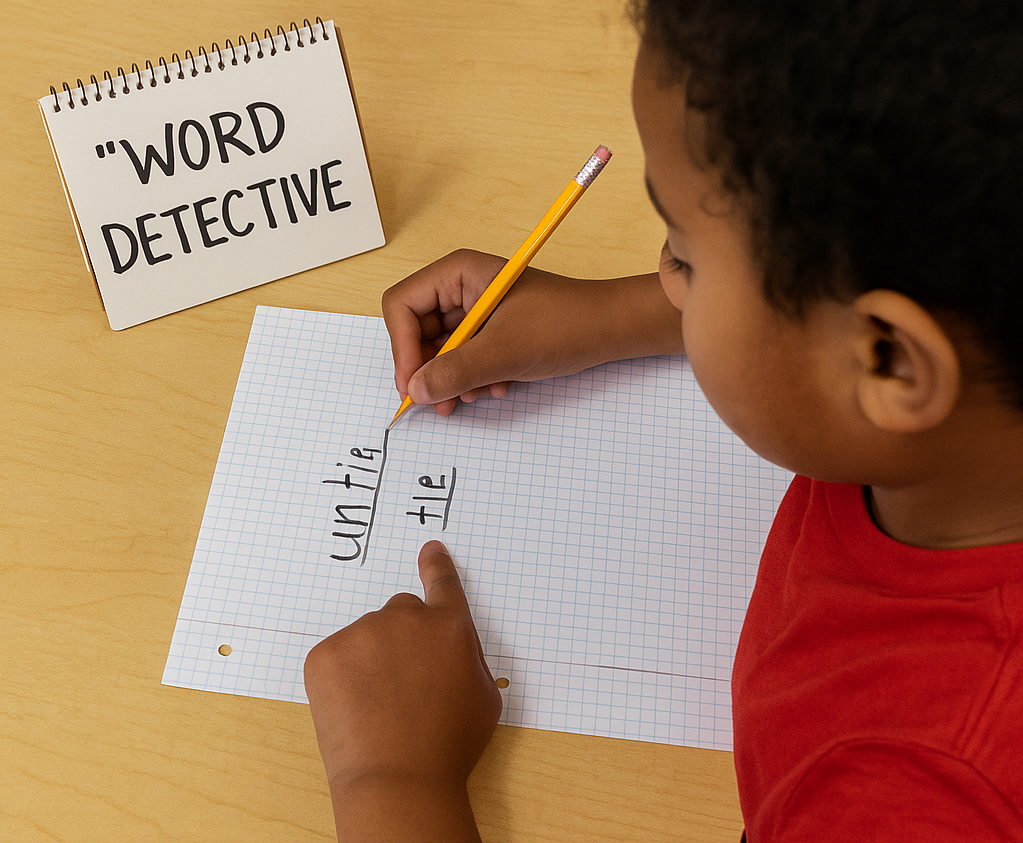
- Prefixes: re- (redo, remake), un- (undo, unhappy)
- Suffixes: -s (cats, dogs), -ed (jumped, baked)
- Base words: help, play, act
When students recognize these units, they can tackle unfamiliar words more easily. For example, if a child knows the base word help and the suffix -ed, they can read and spell helped without guessing. This understanding also supports comprehension: they see that helped isn’t a new, random word—it’s “help” plus -ed, meaning it already happened.
Morphology Supports Irregular Spellings
Morphology is particularly useful for decoding words that don’t follow predictable phonics patterns. Consider words like sign or knight. Their pronunciations don’t match their spellings, but their morphemes remain consistent across related words: signature, signal, or knightly, knife. When students understand that spelling is often linked to meaning, rather than just sound, they can approach irregular words with strategies instead of frustration.
By introducing young students to the concept that some words have patterns connected to meaning, we give them a framework for remembering tricky spellings. Instead of thinking, “This word is weird,” they learn, “Ah! That gn spelling shows up in this word family and in words that share meaning.”
Practical Classroom Strategies for Morphology
Here are some classroom-friendly ways to integrate morphology into K–3 instruction:
- Word Building Games: Use magnetic letters or letter tiles to create base words and add suffixes or prefixes. Example: start with play, then add -ed or -ing.
- Sorting Activities: Have students group words by common morphemes: cat, cats; help, helped, helping.
- Highlight Morphemes in Reading: When reading aloud, point out prefixes, suffixes, and base words. Ask, “What part of this word tells us more than one?”
- Mini-Lessons on Irregular Words: Choose one irregular word per week and explore its related words. For instance, sign → signature, signal.
Fun with Word Origins
While etymology isn’t the focus for K–3, sharing small stories about word origins can make spelling memorable. For example, explaining that knight comes from an old word meaning “servant” or “boy” can spark curiosity. Sharing with students that the Old English word (kniht) knight was once pronounced with the /k/ sound and the “gh” was also pronounced like a throaty “h” makes spellings interesting. The word ‘knight’ is a snapshot of history frozen within its spelling! These stories help students remember why the “k” and the “gh” are still in the spelling even though they are silent in today’s pronunciation. Short, fun facts like this turn irregular words into mini-history lessons and make learning engaging.
Building a Strong Foundation
Integrating morphology into early reading instruction strengthens students’ ability to decode, spell, and understand words. By combining phonics, orthography, and morphology, we help students move beyond memorization toward true word knowledge. They don’t just read the words—they understand them. And that’s a gift that lasts a lifetime.
References
- Foorman, B. R. (2023). Learning the code. In S. Q. Cabell, S. B. Neuman, & N. P. Terry (Eds.), Handbook on the science of literacy (p. 75). The Guilford Press.
- Henry, M. (2023). Unlocking literacy: Effective decoding & spelling instruction. Paul H. Brookes Publishing Company.
- Dehaene, S. (2010). Reading in the brain: The science and evolution of a human invention. Viking.
- Adams, M. J. (1990). Beginning to read: Thinking and learning about print. MIT Press.