Helping K–3 Students Decode Words: Phonemes, Graphemes, and Orthography
Helping K–3 Students Decode Words: Phonemes, Graphemes, and Orthography
Most of us cannot remember the day-to-day experiences of learning to read, but we likely have vague memories of early readers our teachers used—like the Dick and Jane books first published in 1930 or later, leveled texts with repetitive phrases, simple stories, and plenty of pictures. They weren’t always exciting, but they did help beginners build confidence. I still remember the satisfaction of finishing one of those books and being praised for reading so well.
Those early readers, like the Dick and Jane series, were part of a movement to support children struggling with reading. The focus, along with other books of that type, was on whole-word reading—an instructional method that dominated from the 1930s through the 1980s. Looking back, though, I wonder: Were we truly learning to read? I remember reading the same words repeatedly and rarely sounding out unfamiliar words; it was more memorization than decoding.
Fast forward to fourth grade: my reading scores began to slip. Many words I encountered didn’t follow the predictable patterns I had been exposed to, and I lacked the decoding skills needed for more complex text. My experience mirrors that of many children today. According to the 2024 NAEP results, only 31% of fourth-grade students performed at or above the Proficient level. Why fourth grade? By then, texts become more complex, both in language and content. Young readers begin to struggle with multisyllabic words, limited vocabulary, and a lack of continued explicit phonics and decoding instruction.
While phonics and vocabulary are essential, teaching reading requires more than just these elements. Reading encompasses a complex mix of factors, including the cultural relevance of texts, access to materials, motivation, and more. Teaching reading with a focus solely on phonics would shortchange students’ literacy development.
The Alphabetic Principle and the English Language
Although English contains many irregular spellings, the language is surprisingly regular in its letter-sound correspondences, with most words following predictable patterns that can be taught systematically (Adams, 1990; Foorman, 2023; Henry, 2023). English has 44 speech sounds but only 26 letters, and sometimes multiple ways exist to spell a single sound. For example, the /f/ sound can be spelled f (fun), ff (puff), ph (photo), or gh (laugh). These variations can challenge young readers, who may master fun but struggle with phone or laugh if predictable patterns aren’t explicitly taught and reinforced.
English is considered a deep orthography, meaning words do not always have a one-to-one mapping between sounds (phonemes) and letters (graphemes). Words like bough, colonel, or yacht break typical sound-to-spelling rules, making decoding difficult for young learners.
Reading involves more than just understanding sound-symbol relationships. As Dehaene (2010) explains, while orthography encodes phonology, reading is a complex process requiring visual engagement. When students see print, they rely on both phonics and visual processing to recognize the unique shapes of letters. Letters like b, d, and p are visually similar, rotated 180 degrees from each other, making visual discrimination critical. Over time, repeated reading and writing build up visual patterns that help students recognize letters and words efficiently.
Practical Strategies for K–3 Classrooms
Helping young readers connect sounds to letters requires active, hands-on practice. Here are strategies backed by research and classroom experience:
- Focus on sounds first: Isolate and practice phonemes in words before blending them.
- Connect sounds to letters: Have students say a sound and write the corresponding letter(s). This strengthens both decoding and spelling.
- Highlight spelling patterns: Teach syllable types and patterns to decode unfamiliar words systematically.
- Use multi-sensory approaches: Encourage tracing letters in sand, sky writing, or finger-tapping sounds as they say each phoneme.
- Daily connected reading: Provide texts where students can apply their decoding skills, reinforcing phoneme-grapheme correspondences.
Recommended tools and activities:
- Sound walls: Display each phoneme with its letter(s) to support visual recognition.
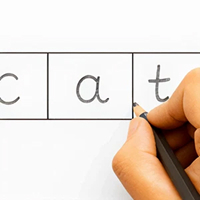
- Elkonin boxes with writing: Segment words into sounds and write the corresponding letters.
- Word sorts: Identify patterns in spelling and pronunciation.
- Connected texts: Offer daily reading aligned to students’ current phonics knowledge to build automaticity and fluency.
By combining these strategies with consistent practice, students develop essential decoding skills and build confidence as readers.
References
- Adams, M. J. (1990). Beginning to read: Thinking and learning about print. MIT Press.Bottari, M. (2025, August 12). Transitioning from word walls to sound walls. Reading Rockets. https://www.readingrockets.org/topics/phonological-and-phonemic-awareness/articles/transitioning-word-walls-sound-walls
- Dehaene, S. (2010). Reading in the brain: The new science of how we read. Viking.
- Foorman, B. R. (2023). Learning the code. In S. Q. Cabell, S. B. Neuman, & N. P. Terry (Eds.), Handbook on the science of literacy (p. 75). The Guilford Press.
- Henry, M. (2023). Unlocking literacy: Effective decoding & spelling instruction. Paul H. Brookes Publishing Company.
- National Center for Education Statistics. (2024). Explore results for the 2024 NAEP reading assessment. U.S. Department of Education. https://www.nationsreportcard.gov/reports/reading/2024/g4_8/