
The Architecture of Reading
The Architecture of Reading

Teaching students foundational reading skills is akin to building the foundation of a house. Just as a house relies on strong footers and framing, reading instruction begins with teaching students how to break the "code" of language—decoding written symbols into sounds. This early code-breaking must be solidified through instruction that is both systematic and “sticky”—the kind that transfers into long-term memory. When learning adheres in this way, each new skill becomes a layer in a student’s developing literacy skills. Just as a project manager uses blueprints to oversee the construction of a home, educators rely on a scope and sequence—a strategic plan outlining what to teach and when. This plan ensures that instruction is both sequential and cumulative, two key principles in effective reading instruction (Moats, 2020). The end goal for the builder is a finished home; for the teacher, it is a proficient reader.

In early literacy instruction—especially in kindergarten and first grade—we act as scaffolders, supporting the development of both decoding skills and language comprehension. According to the Simple View of Reading (Gough & Tunmer, 1986), reading comprehension (RC) is the product of decoding (D) and language comprehension (LC), expressed as D × LC = RC. This model highlights that both components are essential. A student may decode fluently but fail to understand the text if their vocabulary or syntax knowledge is lacking. Conversely, strong comprehension cannot compensate for poor decoding skills. Neither factor alone is sufficient. Effective early reading curricula address both sides of this equation. Decoding instruction emphasizes phonics: linking phonemes (the smallest units of sound) to graphemes (the written symbols that represent those sounds). Simultaneously, teachers build language comprehension through read-alouds, rich discussions, and vocabulary exposure that enhance students’ understanding of text structures, genres, and syntactic patterns (National Reading Panel, 2000).
But how do we do all this well—and efficiently?
Teachers are time-sensitive professionals, governed by bells, assessments, and academic calendars. Every minute of instruction counts. Thus, phonics instruction must be both efficient and repetitive. For example, teaching one letter per week may not provide sufficient momentum to reach reading of CVC (consonant-vowel-consonant) words by the end of kindergarten. Curriculum, assessments, and state standards must align, and instruction must mirror this alignment to ensure coherence and progress. When I observe early elementary educators at work, I’m consistently in awe. Each teacher is constructing what could be likened to a subdivision—twenty or more foundations—in just 185 days. Before they even begin formal instruction, they prepare the “building site”: fostering executive functioning, creating a welcoming environment, and instilling the habits necessary for academic success. These elements are as essential as any skill on a phonics checklist.
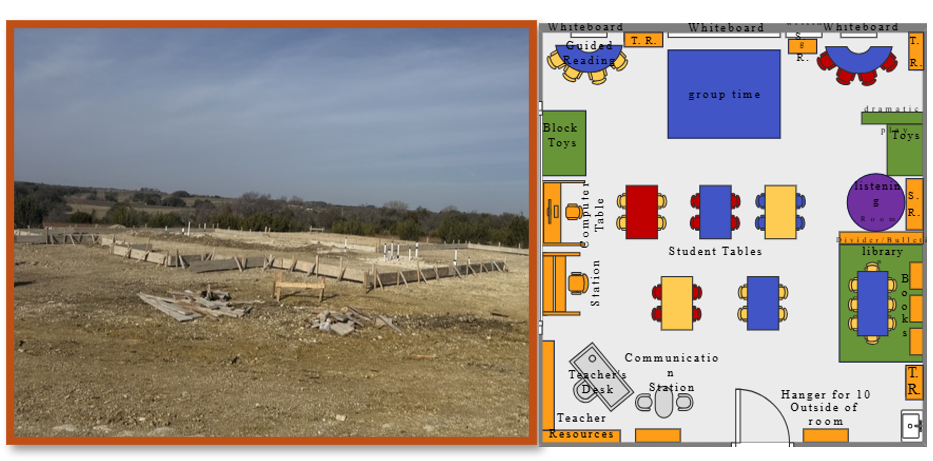
Yes, construction can look messy at first. But by year’s end, kindergarten teachers have laid firm foundations, and first-grade teachers have reinforced them with secure framing— skills that interlock like Velcro, ready to catch and hold new learning. And yet, this is only the beginning! Early-grade teachers must not only help students build a strong foundation; they must create interconnected neural pathways capable of supporting increasingly complex thinking over time. These pathways—strengthened through repeated, explicit, and engaging instruction—will support reading fluency, comprehension, and ultimately the ability to learn independently across all subjects (Dehaene, 2009). Like any well-constructed building, a student's reading brain must be designed to grow, adapt, and endure. And that design starts with us.
References:
• Dehaene, S. (2009). Reading in the Brain: The New Science of How We Read. Viking. • Gough, P. B., & Tunmer, W. E. (1986). Decoding, Reading, and Reading Disability. Remedial and Special Education, 7(1), 6–10. • Moats, L. C. (2020). Speech to Print: Language Essentials for Teachers (3rd ed.). Brookes Publishing. • National Reading Panel. (2000). Teaching Children to Read: An Evidence-Based Assessment of the Scientific Research Literature on Reading and Its Implications for Reading Instruction.